


Crooked teeth may be the first thing you notice when looking in the mirror. However, the way your upper and lower teeth meet can be just as important as their appearance. An uneven bite can make chewing uncomfortable, contribute to tooth wear, and make certain areas harder to clean.
For many adults and teenagers in Chandler, Invisalign offers a discreet way to address alignment concerns. But can clear aligners correct bite problems, or are they only useful for straightening teeth?
What Bite Problems Can Invisalign Treat?
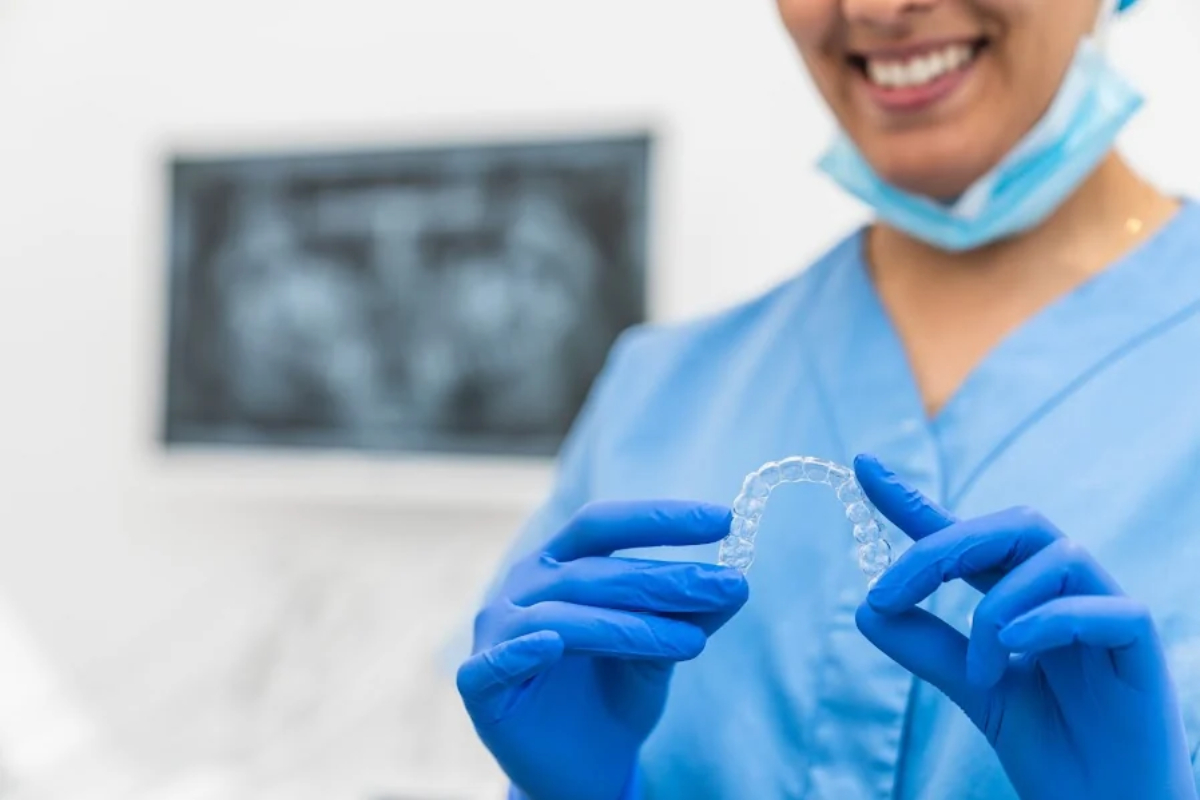
Invisalign uses a series of custom-made, removable aligners to move teeth gradually. Depending on the complexity of the case, treatment may address several common alignment problems.
Overbite
An overbite occurs when the upper front teeth overlap the lower front teeth excessively. Some overlap is normal, but a deep bite may contribute to tooth wear or gum irritation.
Invisalign can improve certain overbites by repositioning teeth. More complex cases may require additional orthodontic treatment.
Underbite
An underbite occurs when the lower front teeth sit ahead of the upper front teeth.
Mild underbites caused primarily by tooth positioning may respond to clear aligners. Significant jaw-related underbites may require other treatment approaches.
Crossbite
A crossbite happens when some upper teeth close inside the lower teeth rather than outside them.
Certain crossbites can be corrected with aligners. The appropriate treatment depends on whether the problem involves tooth positioning, jaw structure, or both.
Open Bite
An open bite means some upper and lower teeth do not touch when the mouth closes.
This can affect biting into foods and may be associated with habits such as tongue thrusting. Invisalign may help correct selected cases.
How Does Invisalign Move Teeth?
Invisalign in Chandler begins with a dental examination and a digital assessment of your teeth. Your dentist evaluates tooth alignment, bite relationships, gum health, and treatment goals.
A customized treatment plan maps out the intended tooth movements. Patients then wear a sequence of aligners, generally for 20 to 22 hours daily, removing them for meals, brushing, and flossing.
Some cases require small tooth-colored attachments to help aligners apply controlled forces. Others may require elastics or additional procedures.
Progress appointments allow your dentist to monitor movement and make adjustments when necessary.
Can Invisalign Improve Chewing Comfort?
When teeth do not meet properly, certain teeth may experience more pressure than others.
Correcting an uneven bite can improve how chewing forces are distributed.
However, Invisalign is not a guaranteed solution for jaw pain, headaches, or temporomandibular joint disorders. These conditions may have several causes and require separate evaluation.
What Makes Someone a Candidate for Invisalign?
Clear aligners may be appropriate for patients with:
- Mild to moderate crowding
- Spaces between teeth
- Certain overbites or underbites
- Selected crossbites and open bites
- Previously straightened teeth that have shifted
Healthy gums and adequate dental support are important before beginning orthodontic treatment.
Patients with untreated cavities, periodontal disease, or significant bite discrepancies may need additional care.
Why Treatment Planning Matters
Two people with similar-looking crooked teeth may need very different treatment plans.
One may have a straightforward spacing problem. Another may have a skeletal jaw discrepancy that cannot be corrected by moving teeth alone.
A thorough examination helps distinguish these situations.
At Provinces Dental, patients in Chandler can discuss Invisalign as part of the practice’s cosmetic dentistry services.
FAQs About Invisalign in Chandler, AZ
1. Can Invisalign fix an overbite without braces?
Invisalign can improve many dental overbites, but not every case. The severity and underlying cause determine whether aligners are appropriate.
2. How long does Invisalign treatment take?
Treatment commonly lasts several months to more than a year. Complex bite corrections may require longer treatment.
3. Is Invisalign suitable for adults in Chandler?
Yes. Adults with healthy teeth and gums may qualify for Invisalign. Provinces Dental can evaluate alignment concerns and discuss available treatment options.
4. Will I need retainers after Invisalign?
Yes. Retainers help maintain tooth alignment after active treatment. Without retention, teeth can gradually shift.
Discover What Invisalign Could Change About Your Smile
A straighter smile is only part of the picture. Improving tooth alignment may also support more comfortable biting and easier oral hygiene.
Contact us to learn whether clear aligners are appropriate for your teeth and bite.


