


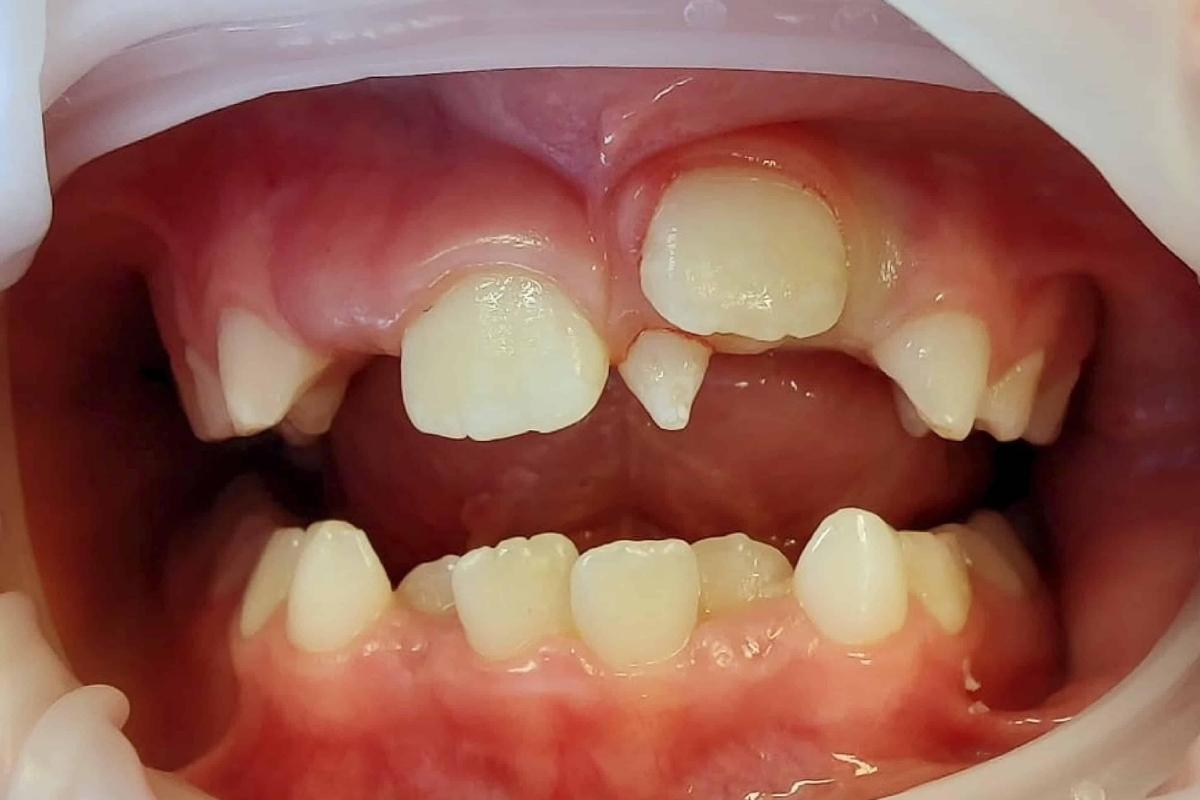
Seeing a tooth erupt in an unusual place—especially in the upper gums—can be surprising and even alarming for parents. If your child has a tooth growing higher than expected or in an odd position, you’re not alone. This condition is more common than you might think and is often manageable with early dental care.
At Provinces Dental, we frequently help parents understand why this happens and how to ensure their child’s smile develops properly.
What Does It Mean When a Tooth Grows in the Upper Gums?
A tooth growing in the upper gum area (above its normal position) is often referred to as an ectopic eruption. This means the tooth is coming in at an abnormal angle or location instead of aligning properly with the rest of the teeth.
In children, this typically occurs with:
- Permanent incisors (front teeth)
- Canines (eye teeth)
- Molars
Sometimes the tooth may appear to be growing out of the gum higher than expected, or even toward the lip or roof of the mouth.
Common Causes of Teeth Growing in the Upper Gums
Understanding the root cause helps determine the best treatment approach.
1. Overcrowding in the Jaw
If your child’s jaw doesn’t have enough space, incoming teeth may shift upward or sideways to find room.
2. Delayed Loss of Baby Teeth
When baby teeth don’t fall out on time, permanent teeth may erupt in the wrong place.
3. Extra Teeth (Supernumerary Teeth)
Some children develop extra teeth that block the normal eruption path, forcing other teeth to grow abnormally.
4. Genetics
Family history can influence tooth alignment and eruption patterns.
5. Trauma or Injury
An injury to the mouth can disrupt the natural path of tooth eruption.
6. Impacted Teeth
Teeth that are unable to break through the gum properly may emerge in unusual positions.
Signs and Symptoms to Watch For
Parents should keep an eye out for:
- A tooth appearing higher in the gum than normal
- Teeth erupting behind or in front of baby teeth
- Crowded or overlapping teeth
- Difficulty chewing or biting
- Gum swelling or tenderness
- Speech changes in some cases
Early detection can make a significant difference in treatment outcomes.
Potential Risks If Left Untreated
Ignoring abnormal tooth eruption can lead to long-term dental issues:
1. Misalignment (Malocclusion)
Improperly positioned teeth can affect your child’s bite and jaw development.
2. Increased Risk of Tooth Decay
Crowded or misaligned teeth are harder to clean, increasing cavity risk.
3. Gum Problems
Teeth growing in unusual positions may irritate the surrounding gums.
4. Orthodontic Complications
Delayed treatment can make future orthodontic care more complex and costly.
5. Self-Confidence Issues
Visible misalignment can affect your child’s smile and confidence.
How Dentists Diagnose the Problem
A professional evaluation is key to understanding the situation.
At Provinces Dental, diagnosis typically includes:
- A thorough oral examination
- Digital X-rays to assess tooth position
- Monitoring eruption patterns over time
This allows dentists to determine whether the tooth will self-correct or require intervention.
Treatment Options for Teeth Growing in the Upper Gums
Treatment depends on the severity and cause:
1. Monitoring and Observation
If the issue is mild, the dentist may monitor the tooth as it continues to erupt.
2. Extraction of Baby Teeth
Removing a stubborn baby tooth can create space for the permanent tooth to move into the correct position.
3. Orthodontic Treatment
Braces or aligners may be recommended to guide teeth into proper alignment.
4. Removal of Extra Teeth
If supernumerary teeth are present, they may need to be removed.
5. Surgical Exposure
In cases of impacted teeth, a minor surgical procedure may help guide the tooth into place.
When Should You See a Dentist?
You should schedule a dental visit if you notice:
- A tooth growing far above or out of alignment
- Persistent gum swelling or pain
- Baby teeth that haven’t fallen out on time
- Difficulty eating or speaking
- Any unusual changes in your child’s smile
Early intervention can prevent more serious complications and reduce the need for extensive treatments later.
Tips for Parents: Supporting Healthy Tooth Development
You can take proactive steps to protect your child’s oral health:
- Schedule regular dental checkups every 6 months
- Encourage proper brushing and flossing habits
- Monitor the transition from baby teeth to permanent teeth
- Limit sugary snacks and drinks
- Address dental concerns as soon as they arise
Prevention and early care are the keys to a healthy, confident smile.
Why Choose Us?
We specialize in family-friendly dental care tailored to children’s needs. Our team focuses on early detection, gentle treatment, and long-term oral health.
We offer:
- Comprehensive pediatric evaluations
- Advanced imaging technology
- Personalized treatment plans
- A comfortable, welcoming environment
A tooth growing in the upper gums of your child may look unusual, but it’s often a manageable condition when caught early. Whether caused by overcrowding, delayed tooth loss, or other factors, timely dental care can guide proper tooth development and prevent complications.
Schedule your appointment today at Provinces Dental and visit us at 1070 E Ray Rd #7, Chandler, AZ 85225, to ensure your child’s smile grows healthy and strong.
FAQs
1. Is it normal for a tooth to grow in the upper gums?
It can happen during development, but it’s not always normal. A dental evaluation is recommended to rule out underlying issues.
2. Will the tooth move into the correct position on its own?
In some mild cases, yes. However, many cases require dental or orthodontic guidance.
3. What causes a permanent tooth to grow behind a baby tooth?
This often occurs when the baby tooth doesn’t fall out in time, forcing the permanent tooth to erupt elsewhere.
4. Does this condition require braces?
Not always, but orthodontic treatment is commonly used to correct alignment issues.
5. When should I take my child to the dentist?
As soon as you notice abnormal tooth growth, pain, or delayed baby tooth loss, it’s best to schedule a visit.


