


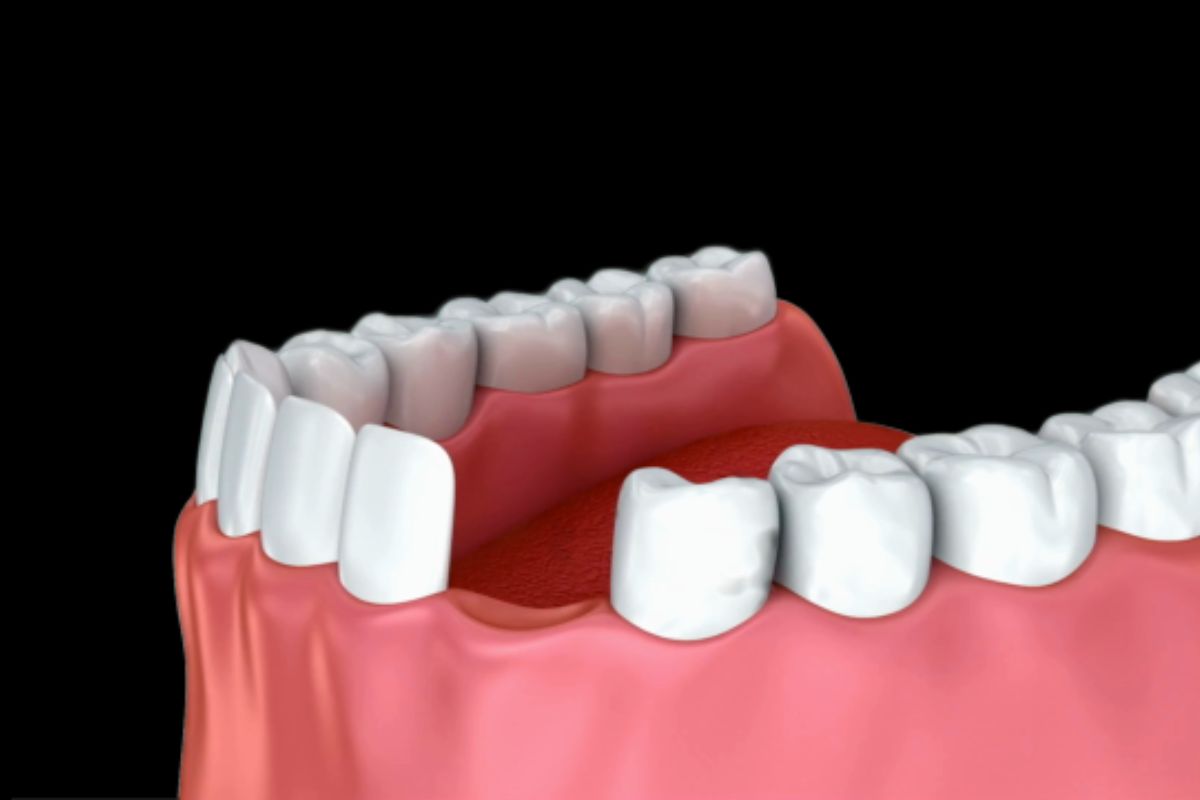
Losing a tooth, especially a visible one, can feel quite unsettling. The front tooth replacement can caused by an accident or a back tooth extracted after many years of use. No matter what the reason was, your main concerns often focus on how it looks and functions. Permanent solutions like dental implants offer a long-lasting and natural-looking fix. However, there is usually a recovery period where temporary options become very important. This guide will walk you through what to expect after an extraction. Learn about different choices for temporary tooth replacement, and how to prepare for regaining your whole smile.
Why a Temporary Replacement?
Once a tooth is extracted, your body must heal. That healing time is necessary for the extraction to heal and, if you’re planning on an implant, for the jawbone to be prepared for the implant post. But having a space in your smile, particularly in the front, can affect your self-esteem, your speech, and your ability to eat comfortably. Temporary tooth replacements step in here. They fulfill a number of critical roles:
Aesthetics: They close the visible gap, enabling you to smile and converse with confidence, whether you are at the Chandler Fashion Center or taking a walk through Desert Breeze Park.
Function: Though not as durable as natural teeth or full permanent restorations, they enable you to chew some foods more comfortably.
Temporary Tooth Replacement Options Common
In determining single tooth replacement following an extraction, your dentist will recommend several common temporary options:
Removable Partial Denture
This is likely the most frequent and usually fastest temporary solution, particularly for replacing a front tooth. A “flipper” is actually a removable acrylic appliance with an artificial tooth bonded to it. It usually has small clasps that encircle your current teeth to support it. It’s not very costly, can be fabricated promptly, and does restore esthetics. It’s simple to remove to clean.
Preparation & Expectation
Impressions of your mouth will be taken by your dentist prior to or after the extraction in order to create the flipper. You may be able to wear it immediately after the extraction, and there may be some minor adjustments as your gums heal and swelling reduces.
Temporary Adhesive Bridge
This is a permanent, non-removable alternative where the artificial tooth is cemented to the back of the next natural teeth with a metal or tooth-colored “wing” framework. It’s less invasive than a conventional bridge. It’s more stable and natural in feeling than a removable flipper, because it’s cemented in. It doesn’t need significant modification to adjacent teeth.
Preparation & Expectation
The neighboring teeth may require minimal preparation to accommodate the bonding of the wings. It offers an excellent aesthetic solution.
What to Expect After Teeth Extraction and Temporary Placement?
Irrespective of the temporary option, the recovery time after tooth extraction entails a healing process.
Initial Healing:
Some bleeding, swelling, and pain are expected. Your dentist will offer personal post-operative instructions to you on taking pain (usually with over-the-counter medication or prescribed pain killers), icing the area to reduce swelling (20 minutes on, 20 minutes off), and avoiding dry socket.
Diet
Stick to a soft food diet for the first few days. Smoothies, yogurt, mashed potatoes, and soups come to mind, things that won’t aggravate the extraction site or stress your temporary appliance. Gradually add more solid foods as comfort dictates.
Oral Hygiene
Keeping your mouth clean is important to avoid infection. Rinse with warm salt water several times a day after 24 hours. Be extremely cautious brushing around the area of extraction and your temporary appliance. If your temporary is removable, brush it thoroughly with a soft brush and water or a denture cleaner.
Adjustments
Your temporary appliance may feel uncomfortable or be sore-spotted at first. This is to be expected. Your dental professional will probably schedule follow-up appointments, like getting check-ups at a health fair in one of the neighborhood community centers, to make adjustments as needed, as your gums heal and shift.
Preparing for Your Temporary Tooth Replacement and Beyond
Discuss Options In Detail
Prior to your extraction, sit down with your dentist and review all temporary and permanent single-tooth replacement solutions. Learn the advantages, disadvantages, price tag, and timing for each. If you’re thinking of having dental implants in Chandler, talk through the whole procedure, as it can take several steps.
Follow Instructions
Strictly follow your dentist’s post-extraction and temporary appliance care instructions. This is important for proper healing and to have your temporary solution remain in use until your permanent one is available.
Plan for the Long-Term
Don’t forget that temporary is not a long-term solution. If you’re choosing a dental bridge, ask how long until your permanent restoration. The osseointegration—the time the titanium post takes to become part of your jawbone—of an implant takes several months.
Practice Oral Hygiene
Good oral hygiene is the top priority at this stage. A clean mouth will ensure healing and protect your healthy teeth.
Restore Your Radiant Smile with Us
Missing a tooth is not about missing your smile or your confidence to appreciate the moments of life. With proper planning and the right temporary solution, you can keep smiling and eating comfortably. In that time, try to recover and get ready for your permanent tooth replacement.
Ready to move forward with rebuilding your entire smile? Schedule an appointment today with our dentist at Provinces Dental. We will walk you through each step of your tooth replacement process!


